Room-by-room heat loss
Measure fabric, ventilation and design temperatures rather than guessing from floor area.
Air source heat pumps
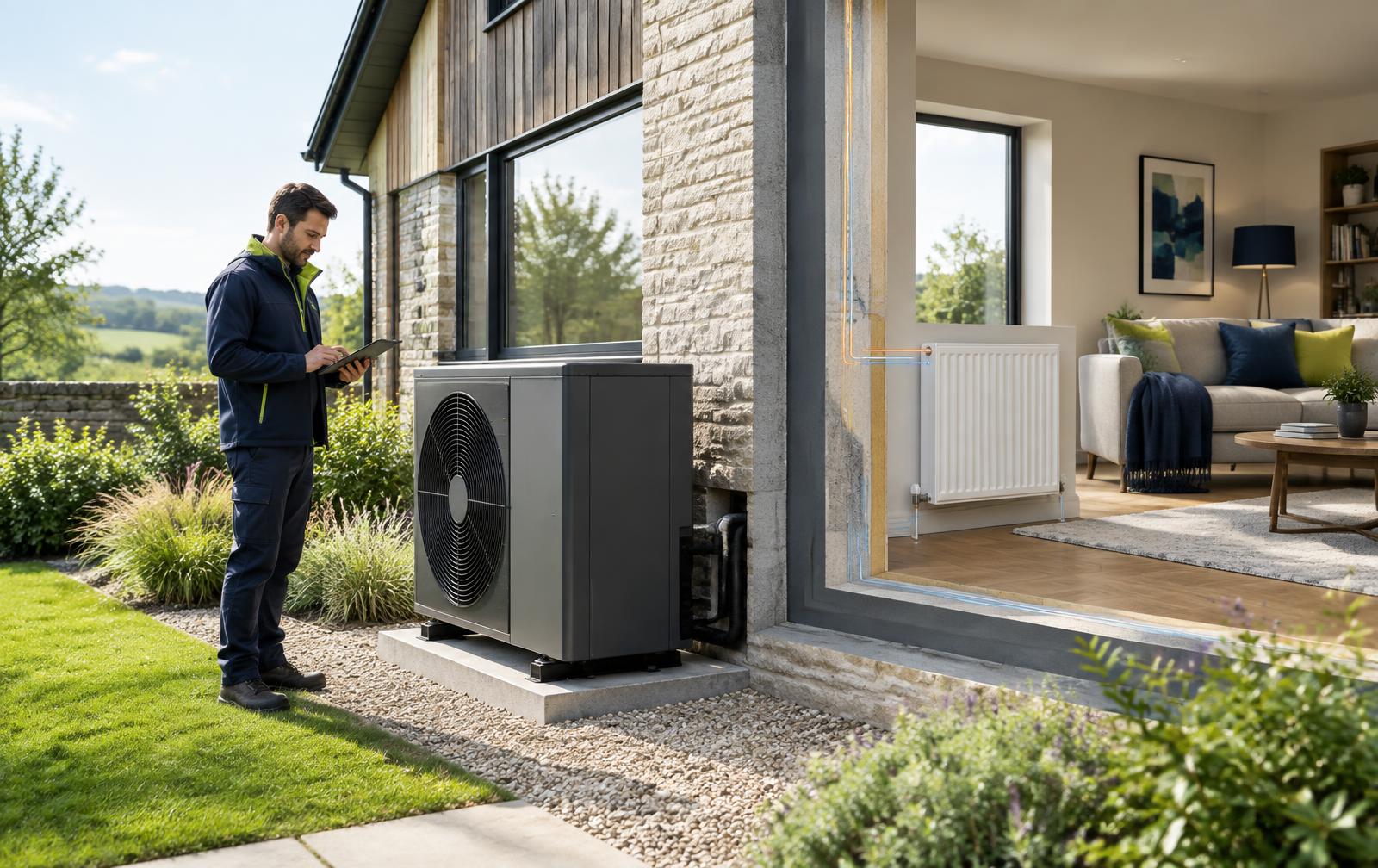
Max coordinates the assessment, design, funding route, installation evidence and aftercare. The heat pump is one part of a complete system, not a box selected from a brochure.
Arrange a heat-loss assessmentDesigned before specified
Measure fabric, ventilation and design temperatures rather than guessing from floor area.
Test whether emitters can keep rooms comfortable at efficient operating temperatures.
Plan pipework, cylinder, controls, defrost and condensate as one system.
Check supply, sound, airflow, planning constraints, access and maintenance space.
Record settings, flows, temperatures, handover, warranties and owner guidance.
Compare outcomes with a weather- and occupancy-aware baseline; do not confuse a forecast with a result.
The cost of change
If your home has a wet heating system with a cylinder, Max can deliver the change to an air source heat pump for less than the cost of a new combi boiler. The grant funding is claimed by Max on your behalf, so you never handle the paperwork.
Typical client contribution
£1,000 to £1,500
Depending on how many radiators need upgrading. The final figure is confirmed by the room-by-room heat loss survey and depends on eligibility, scheme availability and approval.
The Boiler Upgrade Scheme pays up to £7,500 towards an air source heat pump in England and Wales, and up to £9,000 for eligible off-gas-grid homes until March 2027. GOV.UK and Ofgem, checked September 2026.
Advanced heating optimisation
For suitable projects, Max can introduce a specialist integration approach between new low-carbon heating and an existing wet circuit. The protected system is delivered only through our assessed project route.
Potentially simpler retrofit planning
Less disruption on suitable installations
Protection for new equipment connected to older circuits
Reduced ancillary-fluid requirements where design permits
Auditable commissioning evidence
Potential operating-efficiency improvement, subject to design and measurement
Hardware partnerships
Max works directly with selected equipment providers to compare performance data, compatibility, availability, warranty routes and commercial terms. We remain technology-aware rather than forcing every property into one manufacturer’s catalogue.
Where no contribution is needed, zero upfront client cost may be possible. Where a contribution applies, it is typically around £1,000 to £1,500 after the grant funding Max claims on your behalf, confirmed by survey and subject to scheme availability, eligibility, approval and terms. Running-cost savings and payback depend on the existing system, tariff, controls and use.